




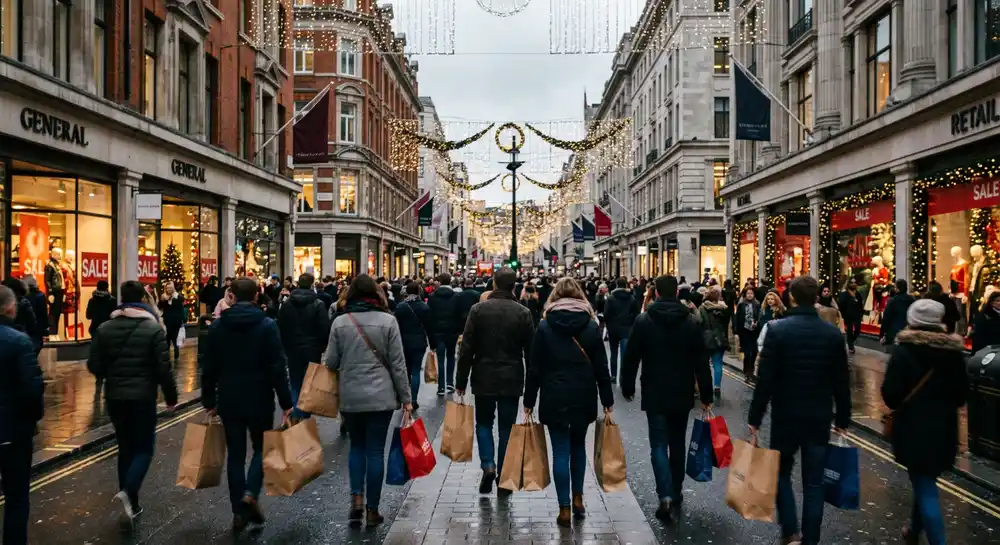
UK fashion sales edged higher in the week before Black Friday, but the gains were slim, footfall fell and fresh research suggests some advertised bargains are not as good as they look, as retailers enter the busiest shopping weekend of the year.
According to the latest BDO High Street Sales Tracker, reported by FashionUnited, like-for-like fashion sales rose 0.56% in the week to 22 November, against a strong comparison of 6.42% growth in the same week last year. Fashion sales in stores rose 0.77%, while online fashion was up 0.70%, its third consecutive week of growth.
That was a sharp slowdown from the previous week, when fashion sales climbed 4.14% and online fashion jumped 6.33%. Across the wider high street, total like-for-like sales rose 6.01%, which BDO attributed to early Black Friday promotions, with non-store sales up 13.92%. Fashion lagged the wider market.
Footfall dips as discounting stretches out
Shoppers were also less visible on the ground. Springboard data cited in the tracker showed footfall down 1.2% overall, with retail parks off 2.6%, shopping centres down 1.8% and high streets down 0.3%, reversing a 2.4% rise the week before. Cold, unsettled weather in northern parts of the UK added to the picture.
The softer numbers come despite forecasts that Black Friday spending will rebound this year. Consultancy PwC expects UK consumers to spend £6.6bn, up 40% on last year’s £4.6bn but still below the record £7.9bn of 2019. It found 53% of consumers are interested in the event, up from 46%, with average planned spend of £235 per person.
Fashion is gaining ground on technology as a reason to shop. While electricals remain the top category, cited by 44% of planned Black Friday shoppers, fashion has risen to 41%. Among women, health and beauty (42%) narrowly beats fashion (41%) as the top priority.
Sam Waller, leader of industry for consumer markets at PwC UK, said: “Some analysts say that the Black Friday sales don’t matter anymore. Our research tells us that this couldn’t be further from the truth.”
PwC also warned that consumer sentiment has fallen 23 points since August to minus 22, its weakest since spring 2023, as higher bills and the prospect of higher interest rates begin to bite.
Are the deals real?
New price-tracking research has raised fresh questions about the value of some offers. Price comparison platform Vouchernaut, which has monitored prices at 98 UK businesses including M&S, New Look, Boohoo and Schuh since 9 October, found that 55,007 products had been reduced by at least 5% and £1 by 23 November, according to Retail Gazette.
Most of those items, around 96%, had reached their lowest recorded price. But around 2,300 products had been cheaper at some point in the 24 days before the sales began. Fashion retailers varied widely: New Look had cut 65% of the 4,607 products tracked to new lows and Boohoo 54%, compared with 10% at M&S. Vouchernaut’s figures cover only the products it monitors, not each retailer’s full range.
The Advertising Standards Authority has warned retailers that they must be able to prove advertised savings are genuine and says it will again use monitoring technology to spot potentially misleading Black Friday adverts.
The brands opting out
A growing number of fashion businesses are stepping back from discounting altogether. Price comparison site MoneySuperMarket found 35% of UK small businesses are not taking part in Black Friday this year, up from 22% in 2025, trade title Drapers reported.
Patagonia is bringing its second-hand Worn Wear range and free repairs to five European stores, including Manchester, over the weekend. Footwear brand Veja is running a “Repair Friday” at its Covent Garden store and other locations, offering cleaning and repair at 50% off for shoes of any brand. Cornish outdoor label Finisterre is donating £2 from every purchase between 24 November and 1 December to Surfers Against Sewage and the Surfrider Foundation.
Bristol this year became the first UK city to ban Black Friday advertising on council-owned billboards, as part of its climate efforts.
What it means for UK readers
For shoppers, the message from the data is to compare before buying. With discounting starting as early as October, many offers have been running for weeks, and the research suggests a small but real share of “deals” were cheaper earlier in the autumn. Checking price histories, delivery charges and returns policies before buying fashion online remains the safest route to a genuine saving.
In London, Black Friday weekend has historically been the busiest of the year for footfall in the West End. This year is the first in which Oxford Street is traffic-free for the event, after a stretch of almost a kilometre between Orchard Street and Great Portland Street was pedestrianised on 26 October. Dee Corsi, chief executive of the New West End Company, said footfall in the West End rose 20% week on week during Black Friday week last year, “and we expect similar demand for 2026”.
What happens next
The trading figures for Black Friday week itself will emerge over the coming days, with Cyber Monday on 30 November closing the peak period. PwC cautioned that retailers face a tougher start to 2027, with Jacqueline Windsor, its head of retail, warning that “the real test for retailers and consumers alike will come in January, when the anticipated ‘credit card hangover’ hits just as costs start rising again.”