




Mulberry has opened a new store at Liverpool ONE, the first to be designed under its turnaround strategy, as the British handbag maker heads into the festive season promising to prioritise full-price sales over the heavy discounting that dominates Black Friday week.
The opening, announced on 27 November, follows half-year results in which the Somerset-based brand cut its operating loss by 41% on the back of an 18% rise in revenue. But a large accounting charge pushed its reported pre-tax loss sharply higher, and its shares fell on the day of the results.
A new look for the North West
The Liverpool shop is the first to open under Mulberry’s “Back to the Mulberry Spirit” strategy, The Retail Bulletin reported. Its interior was designed by Hollie Bowden, co-founder of HBHB, using bespoke fabrics from Mulberry Home, with furniture and detailing by British makers including Byron Pritchard and Nick Melzer.
Alongside core and new-season styles, the store will carry a selection of Mulberry’s pre-loved range and luxury gifts. The company said it would act as a hub for local events, aimed at everyone from younger shoppers buying a first luxury bag to returning customers.
Andrea Baldo, Mulberry’s chief executive, said: “Liverpool is an important city within the brand’s regional expansion plans.” Brendan Hattam, centre director at Liverpool ONE, said the store was opening “just in time for Christmas” and would strengthen the centre’s position as a shopping destination in the North West.
Losses narrow as sales climb
In the 26 weeks to 26 September, Mulberry’s revenue rose 18% to £63.7m, according to results published on 19 November. Retail and digital like-for-like revenue grew 15%, with growth in every region, while wholesale revenue, which makes up about 17% of the total, rose 52%, helped by strong demand in the Nordics.
The operating loss fell to £2.9m from £5m a year earlier, and the adjusted EBITDA loss narrowed to £500,000 from £4.6m. Gross margin rose by one percentage point to 70.2%, which the company put down to more full-price sales and fewer promotions.
The headline figure was less flattering. Mulberry’s reported pre-tax loss widened to £33.4m from £7.1m, largely because of a £27.6m non-cash charge linked to the conversion feature of its convertible loan notes, which rose in value as the company’s share price climbed. Excluding one-off items, the underlying pre-tax loss fell 24% to £5.8m, Retail Gazette reported.
Investors reacted cautiously. The Independent, citing PA, reported that the shares dropped more than 14% after the results were released.
Regionally, UK retail and digital sales rose 10%, Europe grew 23% and the US 28%. In the UK, returning customers increased 8.2% year on year and new customers 6.3%.
Baldo said: “Customers are responding to our product offer, full-price sales are growing and our continued focus on costs is helping us deliver stronger margins and substantially reduce our operating losses.”
Icons, new designs and a runway return
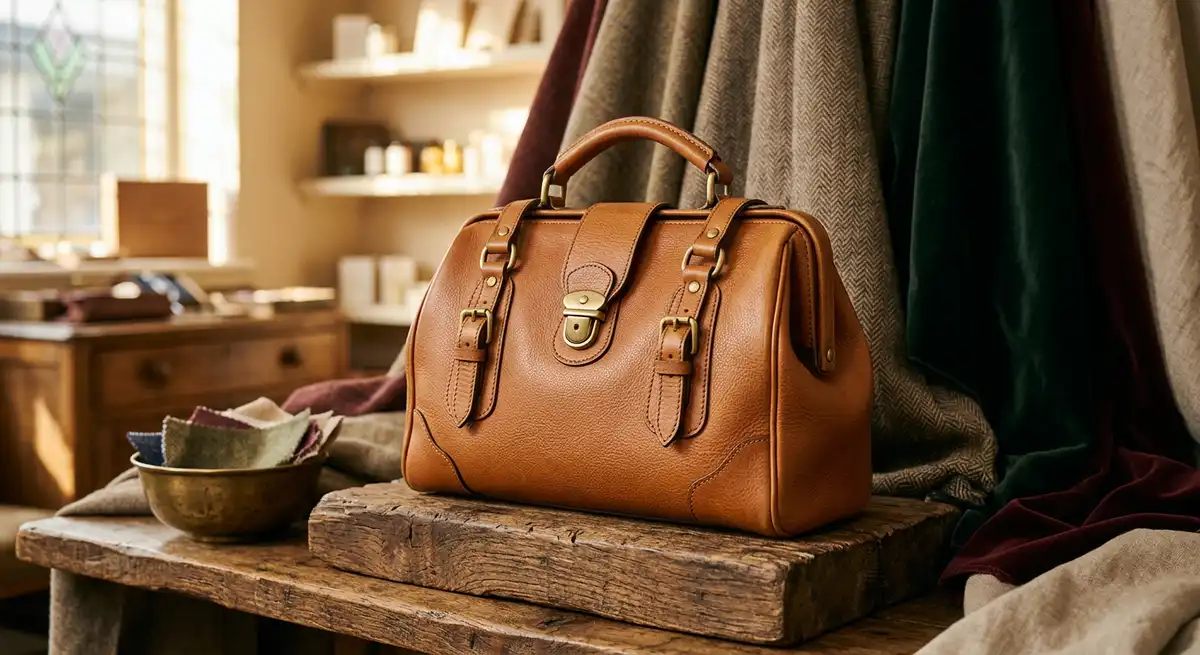
Mulberry said its established bags, the Bayswater and Lily, continued to sell well alongside newer designs such as Stevie, Raffia and Crochet. The strategy, introduced in early 2025, has involved simplifying the business, cutting promotional activity and putting the brand’s best-known designs back at the centre of its offer.
The brand has also tried to rebuild its fashion credentials. Earlier this year it returned to London Fashion Week for the first time in six years with Mulberry by Christopher Kane, a collection due to go on sale in stores and online in January 2027. Baldo described the show as “an important moment for the brand”.
What it means for UK readers
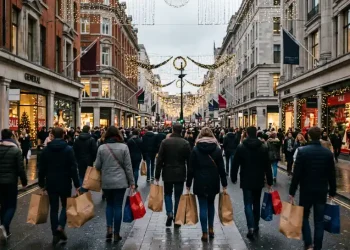
For shoppers, Mulberry’s message this Christmas is clear: do not expect deep discounts. The company said it will focus on “compelling” product and full-price sales during the festive period rather than chasing volume through more promotions. That puts it at odds with much of the high street, where Black Friday offers have been running for weeks.
For the North West, the Liverpool store brings a new Mulberry shop, including its pre-loved range, to Liverpool ONE. For the wider British luxury sector, Mulberry’s progress will be watched as a test of whether a heritage brand can grow by selling less at a discount.
What happens next
Mulberry is entering its second half with what it calls a strong product pipeline, while acknowledging a challenging consumer backdrop. “While these results demonstrate the progress we are making, there remains much more to achieve, and the trading environment remains challenging,” Baldo said, adding that the company’s focus is on “returning Mulberry to sustainable profitability”.
Its festive trading performance, and the January launch of the Christopher Kane collection, will be the next tests of the turnaround.