

A fresh India-Pakistan sporting dispute has erupted after Pakistan were declared winners of the Men’s Blind Cricket Asia Cup in Dhaka without a ball being bowled in the final, prompting the Indian team to boycott the presentation ceremony.
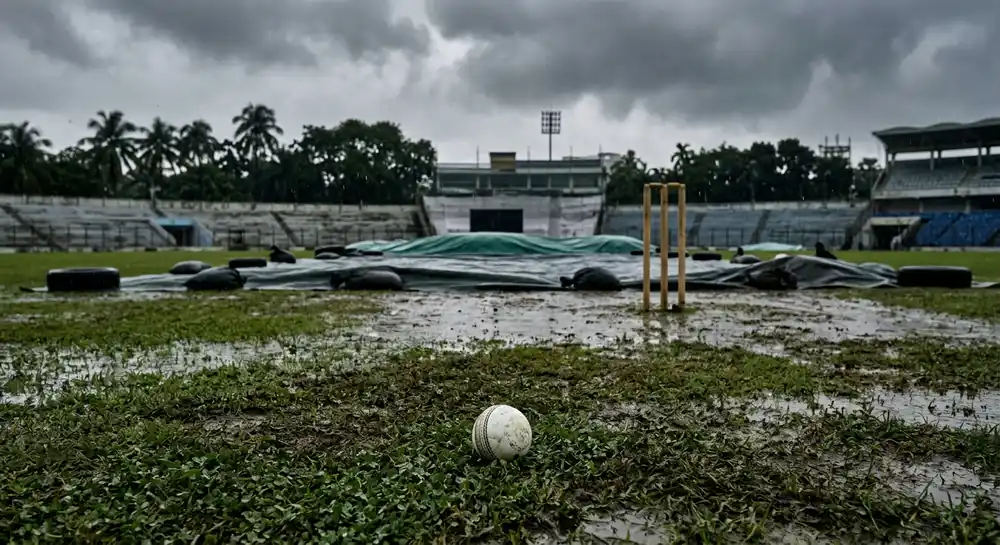
Persistent rain forced the abandonment of the final between the two sides in Bangladesh. The match referee then awarded the title to Pakistan, who had finished top of the league standings, under clause 27 of the tournament’s playing conditions, Dawn reported.
The Cricket Association for the Blind in India (CABI) has rejected the outcome, insisting that the two teams should have been recognised as joint winners.
Heavy rain linked to a cyclone in the Bay of Bengal had fallen on Dhaka since the previous day, and the final, scheduled to start at 11.30am local time, never got under way. Indian team officials told The Times of India that the net run rate clause had not been mentioned in the playing conditions provided to them, a claim Pakistani officials dispute. India had lost to Pakistan in a tight last-over finish during the league stage.
Two readings of the same rule
Pakistan went through the league stage unbeaten, winning all three of their matches against Sri Lanka, Bangladesh and India. That left them ahead of India on points, net run rate and head-to-head record, and Pakistani outlets reported that the decision followed playing conditions circulated to all teams on 7 November.
CABI disputes that interpretation. In a statement reported by Sportstar, it argued that section 27 of the technical regulations deals specifically with a tied final, and said the World Blind Cricket Council (WBCC) Technical Committee had initially agreed that both teams should be declared joint winners.
The Indian body alleges that the WBCC president, Sultan Shah, who is also president of the Pakistan Blind Cricket Council, overruled the committee’s position and the match referee then announced Pakistan as sole champions. Those allegations have not been independently verified.
CABI general secretary Shailendra Yadav said: “I am deeply disappointed and strongly condemn the manner in which Pakistan has declared itself the winner of the Blind Cricket Asia Cup final without a single ball being bowled.” He argued that net run rate was a criterion for qualifying rounds and could not automatically decide a final that never started, the Indian Express reported.
CABI chairman Dr Mahantesh G Kivadasannavar called it “a disgraceful decision and a blatant injustice to the Indian team”, adding that India “will not recognise Pakistan as the sole champion of the Asia Cup 2026”.
Boycott and fallout
The Indian players reportedly argued with the umpires and match referee before leaving without collecting their runners-up trophy. Indian officials have also indicated they will not play Pakistan again in blind cricket until the matter is resolved, and there have been suggestions that CABI could sever ties with the world governing body.
India entered the tournament as defending champions, having won the inaugural Men’s Blind Cricket Asia Cup in 2016.
The row comes at a time of strained sporting relations between the two countries. Senior cricket teams have avoided traditional handshakes in recent fixtures, and a Dawn editorial this week accused India of using its influence over the International Cricket Council to sideline Pakistan from hosting major events. By contrast, the two football teams exchanged guards of honour after this week’s SAFF Championship final, also in Dhaka.
What it means for UK readers
Blind cricket has a strong following in Britain, where England’s visually impaired team competes internationally and the sport is supported by county programmes and charities. Disputes over playing conditions in a major final risk overshadowing the achievements of players whose sport receives limited funding and media attention.
For British-Asian supporters of both nations, the episode is another example of how politics and administration can intrude on sport. It also raises wider questions about governance in disability cricket, where officials can hold senior roles in both national and international bodies at the same time.
What happens next
CABI has formally challenged the decision with the WBCC and is demanding that the original joint-winner ruling be reinstated. The world body will now be under pressure to clarify how its regulations apply when a final is washed out, and whether a reserve day or shared title should be standard in future.
Unless the WBCC intervenes, Pakistan will remain the official 2026 champions. The dispute is likely to continue into the build-up to the next major blind cricket tournaments, where any India-Pakistan fixture will now carry added tension.